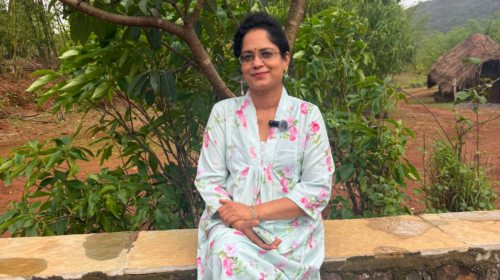
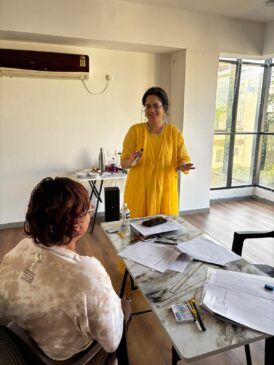
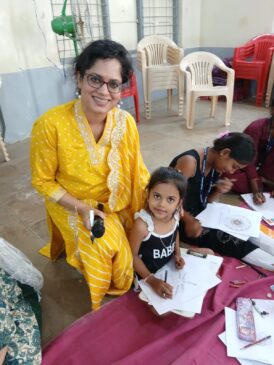
At Brilliant Read Media, it is our constant endeavour to identify and share some of the unique and compelling stories from the startup ecosystem. As part of this, we invited Geeta Joshi Brahme for an interview with Brilliant Read Media. To say it further, Geeta is a Certified Mandala Practitioner and Founder at Sun n Soul. Let’s learn more about her background, inspiring journey so far and her advice for our growing community!
Excerpts from our exclusive interview with Geeta:
What inspired you to begin your journey into Mandala therapy and holistic healing, and how did Sun n Soul come into existence?
My journey into healing wasn’t something I consciously planned; it unfolded naturally through my own life experiences. For nearly fifteen years, I worked as a commerce professor. Teaching was deeply fulfilling, but somewhere within me, I always felt there was a greater purpose waiting to be discovered.
Like many people, life presented me with emotional challenges, personal setbacks, and health-related experiences that made me realise how closely our mind, body, and emotions are connected.
During that phase, I was introduced to Mandalas. At first, I admired them simply as beautiful patterns. But as I began practising them consistently, I experienced a remarkable shift within myself. My thoughts became clearer, my emotions felt lighter, and I discovered an inner peace that I had never experienced before.
That personal transformation inspired me to study Mandala therapy in depth and eventually dedicate my life to holistic healing.
Sun n Soul was born from one simple intention to create a safe, compassionate space where people could reconnect with themselves. Today, whether someone approaches me feeling overwhelmed by anxiety, emotionally exhausted, or simply disconnected from life, my mission remains the same: to help them discover that healing already exists within them. Sometimes all we need is the right path to awaken it.
Many people see Mandalas simply as art. How do you explain the deeper emotional and spiritual science behind Mandala therapy?
I always smile when someone says, “Mandalas are beautiful drawings.”
Yes, they are beautiful, but they are so much more than art.
The word Mandala comes from Sanskrit and means a sacred circle or wholeness. For thousands of years, Mandalas have been an integral part of Indian spiritual traditions, symbolising balance, harmony, and higher consciousness.
When we begin creating a Mandala, something profound happens. Our attention gently shifts from the external world to our inner world. The repetitive patterns naturally calm the mind, reduce mental clutter, and create a safe space where suppressed emotions can gradually surface.
I often tell my participants that a Mandala is like a mirror. It doesn’t judge us, it simply reflects what is happening within us.
Every colour we choose, every shape we repeat, and every pattern we create tells a unique story. Through this creative process, people often uncover emotions they didn’t even realise they were carrying.
For me, Mandala therapy has never been about creating a perfect design. It is about creating space for self-awareness, emotional release, and healing.
In today’s fast-paced world, stress and anxiety have become extremely common. How can Mandala practices help people regulate emotions and find inner calm?
Today, our minds rarely experience true rest. We constantly switch between screens, notifications, deadlines, responsibilities, and endless thoughts about the future while replaying the past. As a result, our nervous system remains in a continuous state of alertness.
When someone spends even ten or fifteen minutes creating a Mandala, they naturally begin slowing down. Their breathing becomes softer, their thoughts become less chaotic, and they gradually return to the present moment.
Mandala practice isn’t about escaping life’s challenges; it is about creating enough inner stillness to respond consciously rather than react emotionally.
Over the years, I have witnessed people arrive at my workshops carrying grief, stress, anger, anxiety, and emotional exhaustion. By the end of the session, many simply smile and say, “I don’t know what changed, but I feel lighter.”
Healing doesn’t always require complicated methods. Sometimes it begins by giving ourselves permission to pause, breathe, and reconnect with our inner self.
You often speak about balancing the seven chakras through Mandala work. Could you explain how creativity and energy healing are connected?
I believe creativity is one of the purest expressions of healing.
When we create without fear, comparison, or judgment, our energy naturally begins to flow. Creativity allows us to express emotions that words often cannot.
Each of the seven chakras represents an important dimension of our lives: our sense of security, relationships, confidence, compassion, communication, intuition, and spiritual awareness.
During my Mandala therapy sessions, I carefully design practices that encourage participants to connect with these energy centres through colours, sacred symbols, affirmations, mindful breathing, visualisation, and intentional drawing.
The goal is not simply to create artwork but to restore energetic balance and emotional harmony.
As blocked emotions begin to release, people often experience greater clarity, confidence, emotional stability, and a renewed sense of inner peace. Creativity becomes a bridge between the conscious and subconscious mind, allowing healing to happen naturally and gently.
You conduct Mandala workshops across the world, both online and offline. Have there been any experiences that deeply reaffirmed your faith in this healing practice?
Absolutely. Every workshop reminds me why I chose this path.
One experience that stays with me involved a participant who had been silently dealing with anxiety for years. She joined the workshop believing she wasn’t creative and doubted whether she could even draw a Mandala.
As the session progressed, she gradually relaxed and immersed herself in the process. By the end, she was in tears not because she was sad, but because she finally felt heard by herself. She later shared that, for the first time in years, she experienced complete mental stillness.
Moments like these reinforce my belief that healing doesn’t always happen through conversations. Sometimes silence, colours, patterns, and mindful creativity can speak directly to the heart.
Regardless of age, profession, or background, I have witnessed people reconnect with themselves through Mandala practice. Those transformations continue to inspire me every day.
What misconceptions do people commonly have about mindfulness and spiritual healing?
One of the biggest misconceptions is that spirituality is separate from everyday life or belongs only to certain people.
For me, spirituality simply means becoming more aware of ourselves, our thoughts, emotions, choices, and relationships.
Another misconception is that healing should be instant. In reality, healing is a journey, not a destination. Just as physical wounds require time to recover, emotional healing also unfolds gradually with patience, consistency, and self-compassion.
Many people also believe they are “not creative enough” to practice Mandalas. I always reassure them that Mandala therapy is not about artistic talent. There is no right or wrong design.
The process itself is the healing.
When we let go of perfection and simply allow ourselves to create, we open the door to profound transformation.
For someone who is completely new to Mandala therapy, how can they begin their journey toward emotional well-being?
The first step is beautifully simple: show up for yourself without expectations.
You don’t need artistic skills or expensive materials. All you need is a blank sheet of paper, a pen or colours, and a willingness to spend a few quiet moments with yourself.
Begin with simple circular patterns. Focus on your breathing and allow your hand to move naturally without worrying about the outcome.
Instead of asking, “Am I drawing this correctly?” ask yourself, “How do I feel while creating this?”
That small shift changes everything.
As the practice becomes regular, people often notice increased emotional balance, greater self-awareness, improved concentration, and a deeper connection with themselves.
Healing begins not with perfection but with presence.
What message would you like to share with people who are searching for inner peace and emotional balance in today’s world?
My message is simple: everything you are searching for already exists within you.
In today’s fast-moving world, we spend so much time seeking happiness, validation, and peace outside ourselves that we forget to pause and listen to our own inner voice.
Healing is not about becoming someone new; it is about returning to who you truly are.
Give yourself permission to slow down. Breathe deeply. Create without judgment. Feel without fear.
Whether through Mandalas or any mindful practice, every small step you take toward yourself becomes a step toward peace.
When we reconnect with ourselves, life doesn’t necessarily become easier but we become stronger, calmer, and more capable of navigating it with grace.
Because true healing begins the moment we choose to come home to ourselves.
At BrilliantRead, we don’t just share startup stories; we bring you journeys that challenge perspectives, spark ideas, and fuel ambition. Every story we feature is carefully chosen to add real value, inspire action, and ignite possibility within our growing community of entrepreneurs and dreamers.
If you have a powerful story, one that can inspire, educate, or create impact we want to hear from you.